Razer AVA: Will You Be Able to Use ChatGPT or Gemini? CEO Reveals SDK Future on The Verge
Razer CEO Min-Liang Tan confirms to The Verge that Project AVA (Razer AVA) will be an open platform, allowing users to choose between Grok, ChatGPT, and Gemini.
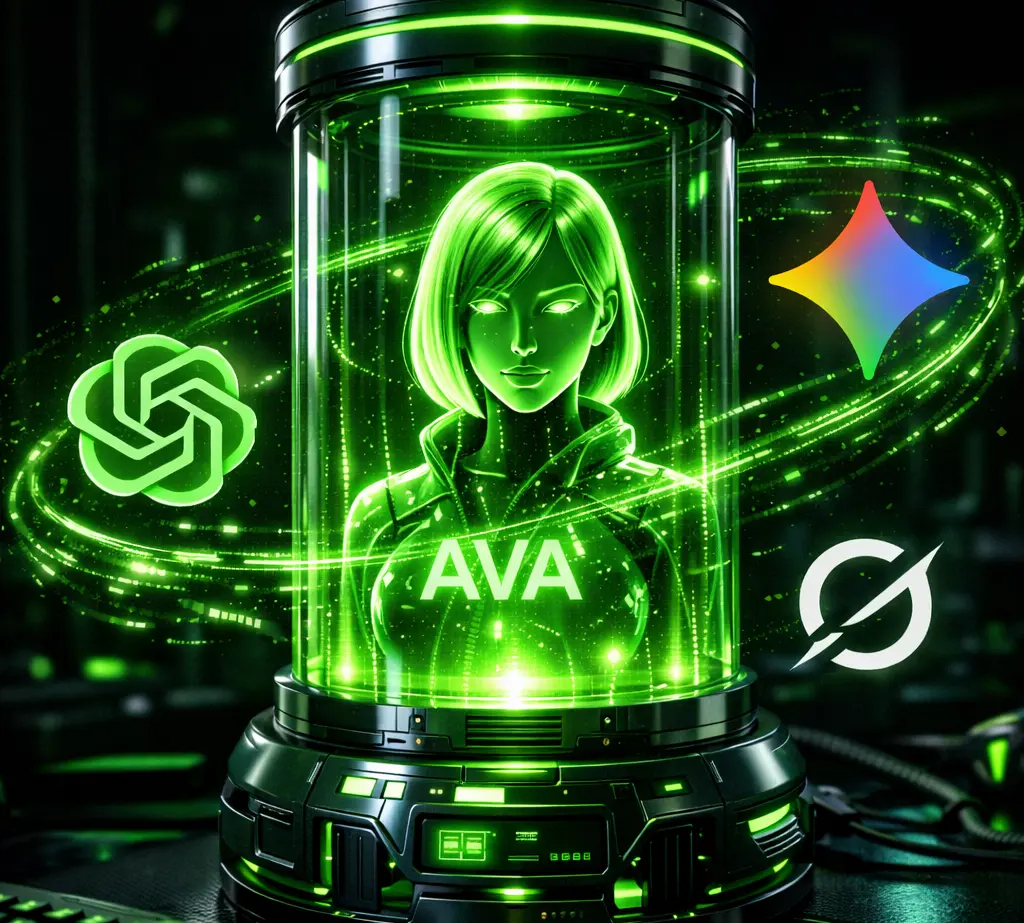
The Future of Holographic AI is an "Open Platform"
Since its unveiling at CES 2026, Project AVA (Razer AVA) has captured the community’s imagination. In a revealing interview for The Verge's Decoder podcast, Razer CEO Min-Liang Tan confirmed vital details that change the game for AI and holographic hardware enthusiasts.
🧠Grok, ChatGPT or Gemini? You Choose
One of the biggest unknowns was whether Razer would limit the device to a single AI engine. Although the initial prototype uses Grok (xAI) for its unique personality, Tan confirmed that Project AVA (Razer AVA) is being designed as an open platform.
This means users will be able to choose the "brain" of their hologram:
- OpenAI ChatGPT: For versatile and productive assistance.
- Google Gemini: For full integration with Google tools.
- Grok (xAI): For those seeking the original conversational experience shown at CES.
More Than Just a Desktop Hologram
Razer's vision goes beyond physical hardware. The key concept is Persistent Memory. Tan explained that your AI companion won't just live in the cylinder but will accompany you ubiquitously, moving to your peripherals like the Project Motoko headphones.
Regarding the current $20 USD reservations, it was clarified that this is not a final purchase, but a priority reservation to manage user feedback before the massive rollout in regions like Spain, the US, or Latin America.
🎓What About Developers? What Actually Exists Today
Tan didn't confirm a public modding SDK for AVA in this interview, and Razer hasn't shipped one since either. What does exist is Razer AIKit, its open local AI toolkit, and a character/IP integration program for studios that want to bring their IP into the AVA ecosystem.
We track this part of the ecosystem on avasdk.com, our independent community resource:
Conclusion: An Ecosystem Without Limits
Razer's decision not to close the ecosystem positions Project AVA (Razer AVA) as the ultimate tool of 2026. The freedom to choose the AI and the openness towards developers mark the beginning of a new era.
Our Take
The confirmation that AVA will be an open platform —being able to choose between Grok, ChatGPT or Gemini— is, for us, the most relevant piece of news in the interview, above any technical detail. It changes Razer's business model: it stops selling hardware with a closed proprietary AI and starts selling neutral hardware that accepts whatever brain you choose. It's a smart move because it shifts the cost of developing the models to third parties, but it leaves open the question Razer hasn't clearly answered: who pays the cloud AI bill, and whether the end user will end up needing subscriptions to each provider. Persistent memory is the most ambitious piece and the one we're most interested in watching, because an assistant that follows you across devices is also an assistant that accumulates a lot of information about you. We'll keep an eye on how Razer handles that privacy.
There's a risk this strategy doesn't solve: if the "brain" is swappable, Razer's differentiation stops living in the AI and rests almost entirely on the hardware — the hologram itself — and whatever memory and personality layer it builds on top. That's a reasonable bet while Razer remains the only maker with a serious physical hologram on the market, but it turns fragile the day OpenAI, Google, or any other AI lab decides to ship its own device. That's where AIKit and the developer ecosystem start to matter: they're the piece Razer actually controls, and no model provider can replicate that overnight.