Project AVA (Razer AVA) Becomes Fully Agentic: From Chatbot to Hologram That Acts For You
At GDC 2026, Razer unveiled the most important evolution of Project AVA (Razer AVA) since CES: a full agentic AI system capable of planning complex tasks, executing them across multiple applications, and coordinating with other AI companions. The hologram no longer answers questions — it completes objectives.
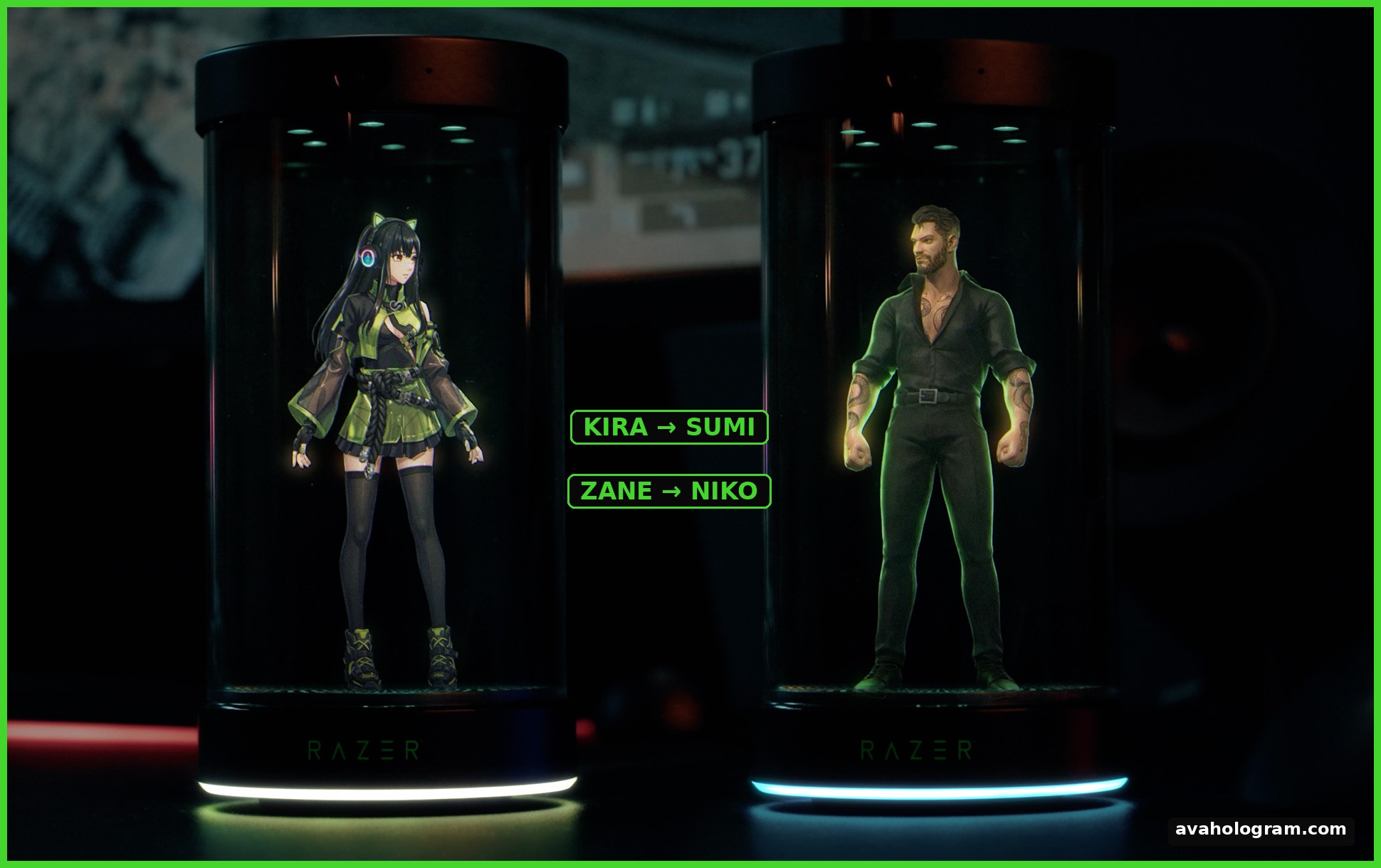
The difference between a conversational AI and an agentic AI is massive: the first responds, the second executes. With the update unveiled at GDC 2026, Project AVA (Razer AVA) makes the definitive leap: it understands an objective, breaks it down into steps, and completes them autonomously across apps, services, and devices.
Update — Sep 9, 2026
The Kira and Zane avatars shown in this article's photo were renamed by Razer to Sumi and Niko, with a deeper visual redesign than the name change alone suggests. We cover all the details in this news piece.
01.What Does It Mean for AVA to Be "Agentic"?
Until now, Project AVA (Razer AVA) was a chat assistant with holographic projection: it answers questions, manages music, and provides live commentary during gaming sessions. Useful, but reactive.
With agentic capabilities, AVA can receive a high-level objective — "set up my stream for tonight" — and handle everything: open OBS, configure scenes, verify the connection, set the playlist on Spotify, and notify your followers. All without you touching a thing.
Quyen Quach, Razer's VP of Software, explained it at the presentation: "It will be able to do multiple tasks with one ask... if you wanted to work on your expense report, it would have to perform multiple tasks to be able to open up your expense tracker and then insert that."
02.Inference Control Plane: Local and Cloud, Frictionless
One of the most important technical developments at GDC is the new Razer Inference Control Plane: an infrastructure layer that decides in real time whether a task is processed locally (on the user's PC) or in the cloud.
The practical result: minimum latency for simple tasks (checking the time, adjusting volume) and cloud power for complex reasoning or content generation. The user doesn't notice the difference, but the system automatically optimizes for cost and speed.
"Running locally and in the cloud is important... certain tasks don't need to go to the cloud... can just check your system for the time and respond."
— Quyen Quach, VP of Software, Razer
03.Companion-to-Companion Coordination
One of the most futuristic features presented is agent-to-agent coordination: your AVA can communicate with another user's AVA to manage shared tasks. Aligning schedules, organizing gaming sessions, confirming team plans — without either user typing a single message.
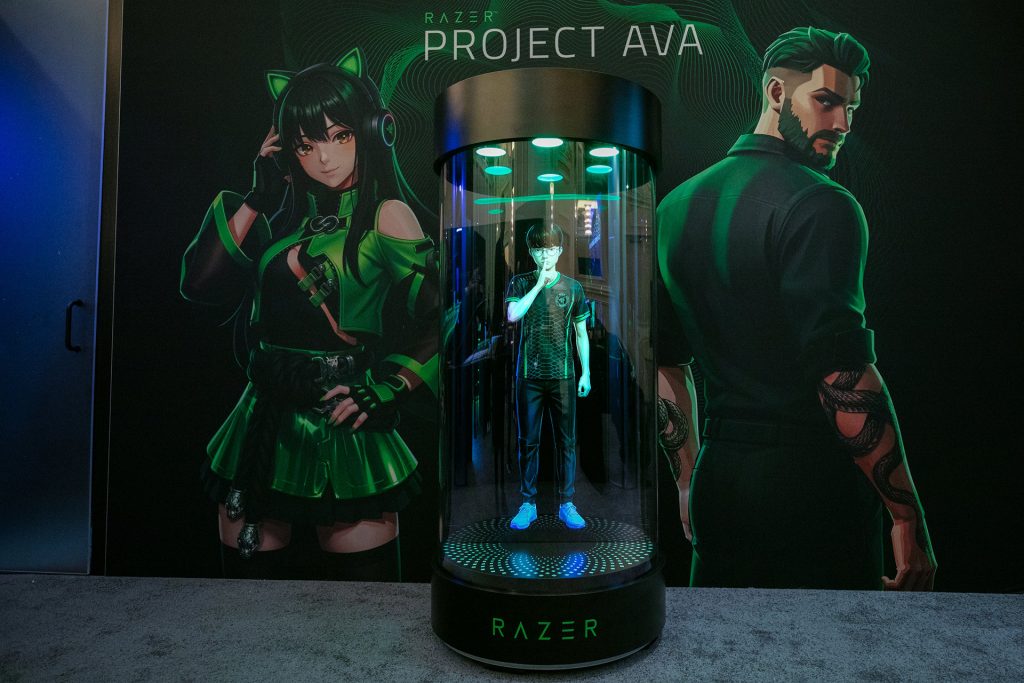
04.Real Use Cases Already Demonstrated
Automated Stream Setup
With a single request, AVA initiates the complete workflow: launches the relevant tools, configures scenes, and moves setup forward end-to-end.
Expense Management
Opens the expense tracker and inserts data automatically, without the user having to navigate menus or copy figures.
Spotify Integration
Native music control: AVA manages playlists based on context (gaming, work, rest) without manual intervention.
Schedule Coordination
Communication between AVAs to align schedules and confirm plans between users, without exchanging direct messages.
05.Beta Now Open — How to Sign Up
Razer has opened registration for the AVA beta with agentic capabilities through Razer Cortex. Early access invitations start rolling out in Q2 2026. The general hardware launch remains scheduled for the second half of this year.
If you have Razer Cortex installed, the sign-up process is available directly in the app. The beta will let early users test agentic workflows before the physical device reaches the market.
If you're a developer looking to get started with Razer's local AI stack, avasdk.com has a complete guide to Razer AIKit — what it is, real requirements, and how it does (and doesn't) relate to Project AVA.
Our Take
AVA's jump from chatbot to autonomous agent is, in our view, the project's most important positioning shift since CES. It stops competing with smart speakers and enters desktop-agent territory, where the value lies in executing rather than answering. That said, almost everything shown at GDC —coordination between AVAs of different users or multistep automation— was presented as a demo and is not confirmed for the final product. The piece we do find solid is the Inference Control Plane, because it solves the real latency and cost problem by deciding in real time what runs locally and what runs in the cloud. Our only reservation is the one Razer hasn't yet explained: what permissions an agent acting on your behalf in your apps will have, and what happens when it gets it wrong.
That reservation about permissions isn't a minor detail: an agent that books restaurants, sends messages, or edits files on your behalf needs, by definition, broad access to your apps. No consumer hardware maker has satisfactorily solved what happens when the agent takes an unwanted action —canceling the wrong reservation, messaging the wrong person— and Razer hasn't signaled how it plans to address that beyond mentioning "agent coordination."
On the demo of coordination between different users' AVAs: it's the most ambitious part and the easiest to promise in a controlled keynote setting. Coordinating agents from a single vendor in a demo is relatively simple; coordinating agents in the real world, with real calendars, third-party apps, and users who don't always confirm what the agent assumes, is a problem of a different order. We'll be watching closely once Razer ships something beyond a product video.
Want to Be Among the First?
Early access to Project AVA (Razer AVA) is underway. Check availability dates and how to reserve your unit.