HOLOGRAM
CUSTOMIZATION
SKINS
Interest in Holographic Desktop Companions has exploded. Welcome to the era of personalized intelligent avatars, where AVA hardware leads the Physical AI Devices category.
Update — Sep 10, 2026
Kira and Zane, the two base avatars covered in this guide, were renamed by Razer to Sumi and Niko shortly after this page was published, alongside a deeper visual redesign than the name change alone suggests. The skins and customization system described below work the same way under the new names. Full details in this news piece.
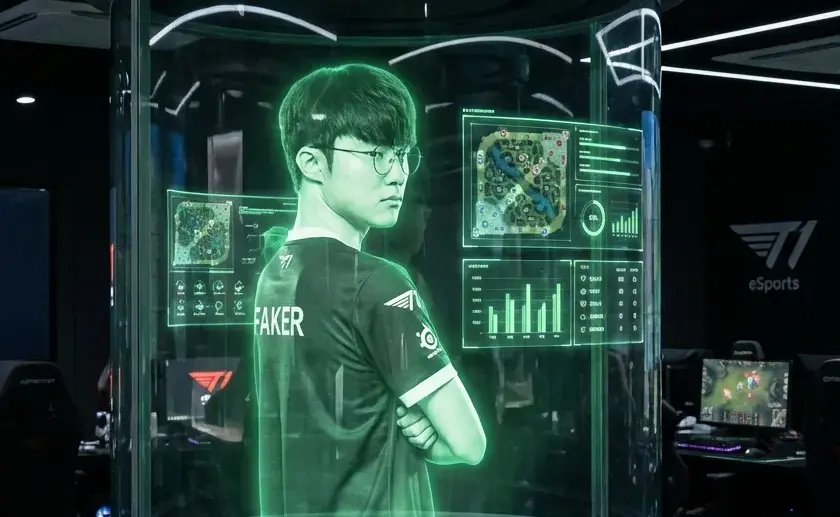
Inspect every angle of Faker's aura. Real-time rendering.
THE LEGACY OF FAKER
The Faker skin is the "Explosive" trend of 2026. This isn't just an avatar; it's the holographic materialization of the Demon King, the most legendary player in eSports history.
Thanks to the Razer AIKit, Faker's avatar textures and reactions are hyper-realistic. Every micro-expression, every crimson aura particle renders in real-time, adapting to your gameplay intensity.
CUSTOM SKINS AVA
Part of the open Faker AI Avatar Skins ecosystem, compatible with the Open Source Hologram SDK.
Beyond Aesthetics
These skins aren't just pretty renders. Every Custom Skin AVA includes AI Agentic Workflows that define personality, contextual reactions, and unique behavior.
Grok Prompts
Define each skin's personality using Grok Prompts. Access exclusive community templates.
Real-Time Assets
Textures adapt dynamically. The Razer AIKit enables procedural real-time rendering.
Open Source SDK
Collaborative development. We're the leading Open Source Hologram SDK community.
Our Take
The skins system is, for us, what turns Razer AVA from a gadget into a platform. It's the first time an AI peripheral ships with an official mod system: each skin isn't an image file but a package with its own voice, behavior and effects. Behind it there's an obvious business bet —paid skins and marquee collabs generate recurring revenue beyond hardware sales— and at the same time a risk: the initial appeal depends on those one-off collaborations, and community modding still has no official tools or date. Our take is that the real long-term value isn't in the skins Razer ships, but in letting the creator community publish their own. If Razer gets the modding tools right, it will have turned the cylinder into a miniature console, with the same network effect that made platforms like the Switch or Roblox huge: the more creators publish skins, the more reasons there are to buy the hardware, and vice versa. If it doesn't, the system stays a closed catalog of paid collabs that ages as fast as each brand deal's shelf life. Timing matters here too: the longer Razer waits to open modding to third parties, the easier it is for another manufacturer — or the community itself, via reverse engineering — to beat it to a de facto open ecosystem.
Join the Development
Are you a designer or developer? Create your own Custom Skins AVA, program unique AI behaviors and share your assets with the largest community of Desktop Companion creators.
// COMPLETE DOCUMENTATION • TUTORIALS • COMMUNITY ASSETS
Pricing Model: What To Expect
Razer hasn't published an official skins price list, but the shape of the model is already visible from what's live today: a base hardware purchase, plus a marketplace of paid character packs on top — the same structure that turned battle passes and cosmetic-only DLC into a bigger revenue stream than the base product for entire studios.
Two signals point that way. First, collab skins tied to a real-world personality carry licensing costs that a one-time, impulse-buy price wouldn't cover — expect these to sit closer to premium cosmetic tiers than to a cheap sticker. Second, the AIKit SDK being open to developers means Razer doesn't have to build every skin in-house; a revenue-share marketplace, where community creators keep a cut of what they sell, would let Razer scale the catalog without scaling its own art team — roughly how Steam Workshop and the Fortnite Item Shop both eventually structured themselves.
What we don't know yet is whether basic customization (recoloring, simple cosmetic swaps) stays free while only voice and behavior packages or named collabs cost money, or whether Razer locks the whole system behind a paywall from day one. That distinction will decide whether AVA feels like a premium gadget with optional extras, or a hardware purchase that turns out to be a storefront.
Character Catalog
Kira
The absolute favorite. Vibrant skins that explode in RGB. Perfect for streamers and content creators seeking maximum visual expressiveness.
Zane
Extreme tactical minimalism. Reactive camouflage and matte finishes. Designed for competitive players who need zero distractions.